Houtong Cat Village 猴硐貓村: trains, bridge and coal mine
Visit Houtong Cat Village by direct train from Taipei. Walk the cat bridge, explore Ruisan coal plant, and connect easily to the Pingxi Line.
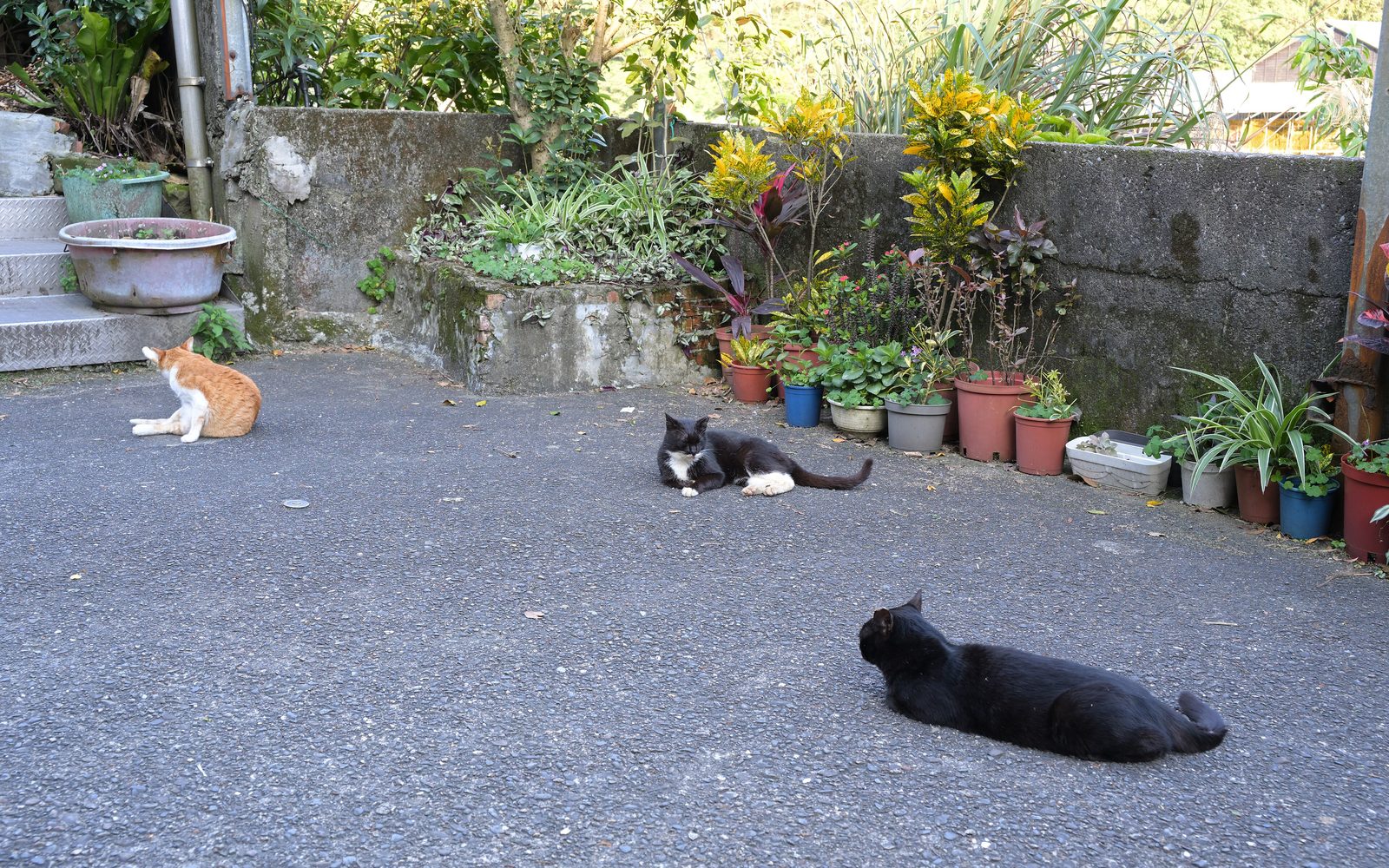
Houtong Cat Village (猴硐貓村) is reached by direct local train from Taipei in under an hour, sitting just one stop past Ruifang. The railway divides the valley into two distinct experiences: an inhabited hillside known for its cats, reached across an enclosed pedestrian bridge, and a riverside complex of restored coal-mining facilities. Because Pingxi Line trains call directly at the station, a stop here fits easily into a broader rail itinerary.
Getting to Houtong by train
Houtong sits on the Yilan Line. On the timetable of Taiwan Railway checked in November 2026, direct local trains run from Taipei to Houtong between 05:26 and 22:07. Most of these direct journeys take between 53 and 56 minutes, costing NT$83 for a full-fare ticket or NT$42 for children and seniors. For the return trip, the last direct local train leaves Houtong at 22:23 and arrives in Taipei at 23:23.
If you are already traveling along the railway network, you can reach Houtong from Ruifang. The hop takes five or six minutes on both Yilan Line and Pingxi Line services, costing NT$22 at full fare and NT$11 for children or seniors. The New Taipei travel site suggests boarding at Ruifang toward Houtong to ride the nostalgic railway and learn about regional coal mining. For more details on tapping transit cards and navigating local rail lines, see our overview of getting around Taiwan. Check the train schedule on the day of travel before setting out.
The cat village and the cat bridge
Houtong Cat Village sits above rich coal seams that once established the settlement as a vital center for Taiwan's coal mining industry. Today, the village area is open all year round.
Connecting the train station to the hillside homes is the elevated cat bridge. It originated in 1970 when Taiwan Railways constructed a basic pedestrian overpass so residents of the Chetouding settlement could cross the tracks to reach the platforms. Following Houtong's emergence as a cat village in 2009, tourist visits rose sharply. The footbridge became the main thoroughfare linking the feline community on the hill with the industrial park along the river, prompting the city to rebuild the structure.
According to the New Taipei City Travel listing for the cat bridge, the bridge is open 24 hours a day, every day. Viewed from the village back toward the station, its exterior resembles a playful cat stretching across the tracks. Inside, the walkway features photographs, illustrations, cat footprints embedded in the structure, and custom-built wooden platforms designed for cats to walk along and jump onto. Visitors can meet cats up close along the elevated path. Following a decade of exposure to humid valley weather, the structure underwent repairs, reopening in March 2025 with new steel beams, replacement panels, fresh lighting, and restored feline platforms. Station visitors are also encouraged by municipal tourism pages to look for the "chief of the cat station" at the station building for a photo together.
The coal town across the tracks
Opposite the village, Houtong preserves a dense collection of mining relics, including tunnel portals, pushcarts, an elevated transport span, old workers' housing, and the headquarters of the Ruisan Mining Company. Following the arrival of the Yilan Line railway, Houtong operated some of the country's most advanced sorting, washing, and production equipment, becoming a critical supplier of industrial fuel. The imposing dark building bearing large exterior lettering, visible directly from arriving trains, is the central preparation plant.
The broader Houtong Coal Mine Ecological Park encompasses the coal transporting bridge, the Ruisan plant, the remains of an old shrine, the Jinzibei Historical Trail, and the station itself. Municipal listings give the ecological park's open hours as 08:00 to 18:00 daily.
Spanning the Keelung River, the coal transporting bridge carried loaded carts directly from pitheads to the washing facility. Reconstructed as a reinforced concrete arch bridge in August 1965, the structure is open all year and displays a vintage mine cart on its deck. From the bridge walkways, you can view the valley, the industrial remains, and the natural potholes ground into the riverbed rock below. After sunset, the bridge structure is illuminated, reflecting across the water.
Walking past Fuxing Bridge leads past an old diesel locomotive maintenance shed, an abandoned mine entrance, and the former miners' dormitory. While appearing from the outside as a two-story building, the dormitory was partitioned into three interior levels, with each small window marking the living quarters allocated to an individual miner's family.
Ruisan Coal Preparation Plant
The original coal preparation facility was erected on the east side of the tracks following the opening of Houtong station in 1920. During peak operational periods, Ruisan sent more than 500 miners underground daily, growing into Taiwan's largest coal company. The operation shuttered in 1990. Following twenty years of structural decay, the city and the Ministry of Culture undertook a three-year restoration project.
The Ruisan Coal Preparation Plant listing documents that the site reopened to the public in 2022, drawing nearly 500,000 visitors. Inside, permanent exhibits recount local industrial history and the everyday routines of workers using multimedia screens and sound-and-light installations. A July 31, 2024 municipal announcement highlighted the venue's interactive coal-washing display as the first installation of its kind on the island. A second development phase, designed to restore exterior mechanical remnants including the coal washing rooms and fuel storage areas, was scheduled for completion in 2026.
Visiting hours for the Ruisan Coal Preparation Plant run from 09:00 to 18:00, with reduced hours from 09:00 to 12:00 on Lunar New Year's Eve. The plant remains closed on the first Monday of each month, or on the following Tuesday whenever that Monday coincides with a national holiday.
The miners' museum and a miner's lunchbox
In 2019, retired workers established the Houtong Miners' Culture and History Museum on a parcel of the former processing complex. Set directly beside the active railway tracks, the museum exhibits authentic tools, historical photographs, and archival safety signage as passenger trains roll by outside. Most volunteer docents are former underground laborers, and visitors can book guided tours led by these retired workers.
The miners' museum remains closed on Mondays. Operating hours run from 09:00 to 11:30 and 13:30 to 17:00 Tuesday through Friday, and continuously from 09:00 to 17:00 on Saturdays and Sundays.
For dining, local food stalls around the station plaza serve traditional boxed miner's meals alongside Taiwanese snacks. Surrounding storefronts sell regional souvenirs, including cat-shaped pineapple pastries.
Adding the Pingxi Line
Houtong functions as a practical gateway to scenic branch-line travel in the north of Taiwan. From Ruifang, trains run south down the Yilan Line through Houtong before switching onto the Pingxi branch tracks at Sandiaoling. Pingxi Line services bound for Jingtong stop regularly at Houtong, including early afternoon services departing Ruifang at 13:00 and 14:00, which pull into Houtong at 13:06 and 14:06.
Travelers spending the day exploring the valley can purchase the Pingxi and Shen'ao branch lines one-day pass issued by Taiwan Railway. Full-fare passes cost NT$120, while concession tickets for seniors and children cost NT$60, matching fares adjusted on June 23, 2025. The physical ticket offers unlimited boarding and alighting between Badouzi, Ruifang, and Jingtong, but remains valid only on the date of purchase and requires a railway date stamp to be valid. You can buy the pass directly at ticketing windows in Houtong, Ruifang, Taipei, Songshan, Banqiao, Keelung, Badu, Yilan, Luodong, Shifen, Pingxi, and Jingtong.
Pairing a morning in Houtong with an afternoon train deeper into the valley forms a standard segment of a Jiufen, Shifen, and Pingxi day trip, linking mining heritage with the mountain villages further down the line.
Facts on this page were checked against official sources on . Hours, fares and trail status change: confirm on the day.