Jinguashi 金瓜石: Gold Museum, Golden Waterfall and Yin-Yang Sea
Plan your trip to Jinguashi with Gold Museum hours and ticket details, direct bus routes from Taipei, Golden Waterfall sights, and the Teapot Mountain trail.
You can visit Jinguashi (金瓜石) by catching a direct bus from Taipei or Ruifang, exploring the Gold Museum and walking down the hill to the coastal sights. The area pairs easily with a mountain morning followed by an evening in nearby Jiufen. The main sights include the Gold Building, the Benshan Fifth Tunnel, the Golden Waterfall, and the panoramic views above the Yin-Yang Sea.
Gold Museum hours, closed days and tickets
According to the Gold Museum's admission details, the museum is open 09:30 to 17:00 from Monday to Friday and 09:30 to 18:00 on Saturdays, Sundays and national holidays. It is closed on the first Monday of each month, but moves that closure to the following Tuesday when that Monday is a national holiday. It also closes on Lunar New Year's Eve and Lunar New Year's Day, and on days when the government closes offices because of a natural disaster such as a typhoon. The museum's 2026 closing-day table lists Monday, December 7, 2026 as the closing day in December.
Admission is NT$80 a person, not counting hands-on activities, and foreign visitors pay this general admission. The English page says tickets can be paid in cash or by EasyCard, and online tickets are sold through the Taipei Fun Pass. Tickets are valid only on the day of admission. Inside the buildings, there is no smoking, eating, drinking, gum or betel nut, no pets are allowed, and visitors may not use flash or tripods unless an exhibition allows them.
Buses from Ruifang and Taipei
From Ruifang station, walk about 100 meters to the Citizen's Plaza next to Ruifang Police Station and take Keelung Bus 788 to Jinguashi. Keelung Bus 788 runs from Keelung Transfer Station through Ruifang and Jiufen Old Street to the Gold Museum at Jinguashi, and continues on to Shuinandong. This service makes it simple to combine mountain sights with other stops across the north coast.
For Keelung Bus 1062 from Taipei, board at MRT Zhongxiao Fuxing station, Exit 2, and get off at the Jinguashi stop after Ruifang and Jiufen. Keelung Bus 1062 runs from MRT Zhongxiao Fuxing station, by way of Songshan station and the Sun Yat-sen Freeway, to Ruifang, Jiufen Old Street and on to Quanji Temple at Jinguashi. On 1062 the full fare from MRT Zhongxiao Fuxing to Jiufen Old Street is NT$94 (NT$78 from Songshan station) and NT$105 to Quanji Temple; the half fare to Jiufen Old Street is NT$47. Keelung Bus 1062 runs every day, on separate Monday-to-Friday and weekend timetables in force from June 1, 2026, leaving from MRT Zhongxiao Fuxing toward Jinguashi and from Quanji Temple back to Taipei.
Parking near the museum is limited, so the museum asks visitors to come by public transport. On national holidays and during events, cars are held at outlying lots and visitors continue by shuttle bus. Drivers are pointed to the parking lot at Quanji Temple, about a 10-minute walk from the museum. The road is winding, and the museum suggests motion-sickness medicine for those who need it.
The 965 shuttle from Banqiao and Taipei
The Taiwan Tourist Shuttle 965 (Jiufen-Jinguashi line) launched on August 15, 2024. It serves Ruifang Train Station and runs to Jiufen Old Street and the Gold Museum in Jinguashi. On 965 a full fare from any of its Banqiao and Taipei stops (MRT Fuzhong to MRT Beimen) to Jiufen Old Street is NT$90, and a half fare is NT$48; a ride within Ruifang district is NT$15. On 965 the full fare from the Banqiao and Taipei stops to the Jinguashi (Gold Museum) stop is also NT$90, and the half fare is NT$48.
Route 965 runs every 15 to 30 minutes on weekdays and every 10 to 30 minutes at weekends and on holidays; the published timetable shows only the on-the-hour departures. At MRT Beimen, wait at exit 2 for 965 toward Jinguashi, and at exit 1 for the bus back toward Banqiao. As with regular options for getting around Taiwan, you can pay on 965 in cash or by tapping an EasyCard, iPASS or icash card when you get on and off.
The route 965 page lists one reservable outbound trip at 09:00 (from MRT Fuzhong, then Ximen at 09:20 and Beimen at 09:25) and one reservable return from Jinguashi at 16:00, reaching Ruifang station at 16:25. Reservations go through the Taipei Fun Pass page, and a day ticket can also be used on regular departures.
The Gold Building and the gold block
The Gold Museum area takes in more than the museum building, including the tunnel experience, a shrine, the four joined Japanese-style dormitories and the Crown Prince Chalet with its garden. Travelers often include this stop on a broader Jiufen and Pingxi day trip.
The Gold Building, the main exhibition hall, is the former mining office of the Taiwan Metal Mining Corporation. The first floor tells a century of mining history with documents, old photos and tunnel models. The second floor holds the big gold brick and about 140 mineral specimens, and explains how Jinguashi gold differs from Jiufen gold.
The museum's prize piece is a gold block of 220.3 kilograms (often rounded to 220 kg) that visitors can touch. The New Taipei travel site says it won a Guinness World Record as the largest gold block in the world. The miner's bento is the famous local meal, and its metal lunchbox can be kept as a souvenir.
Benshan Fifth Tunnel and gold panning
The museum opens the first 70 meters of the Benshan Fifth Tunnel to visitors. Inside are the old air pipe, an old mine locomotive that could pull 13 carts, and figures showing timbering, and behind the last sign the old tunnel runs on for 2 kilometers. Before going in, every visitor puts on a hard hat in the tunnel preparation room.
The museum's English page gives the tunnel fee as NT$50, sold at ticket booths A and B, with tickets checked at the preparation room by the tunnel entrance. Children under 8 or under 120 cm must be with a parent or teacher. The tunnel is narrow and sloping with no step-free route, so visitors with heart conditions, older visitors and pregnant visitors are asked to think before entering. The tunnel can be wet and slippery; no food or drink inside, and no high heels, slippers or sandals.
Gold panning costs NT$100, with sessions at 11:30, 13:30 and 14:30 on weekdays and an extra 10:30 session at weekends and on holidays. Each session takes up to 50 people, on the third floor of the Gold Building, and tickets are sold next to the Gold Building until 14:30.
Golden Waterfall, 13 Levels and Yin-Yang Sea
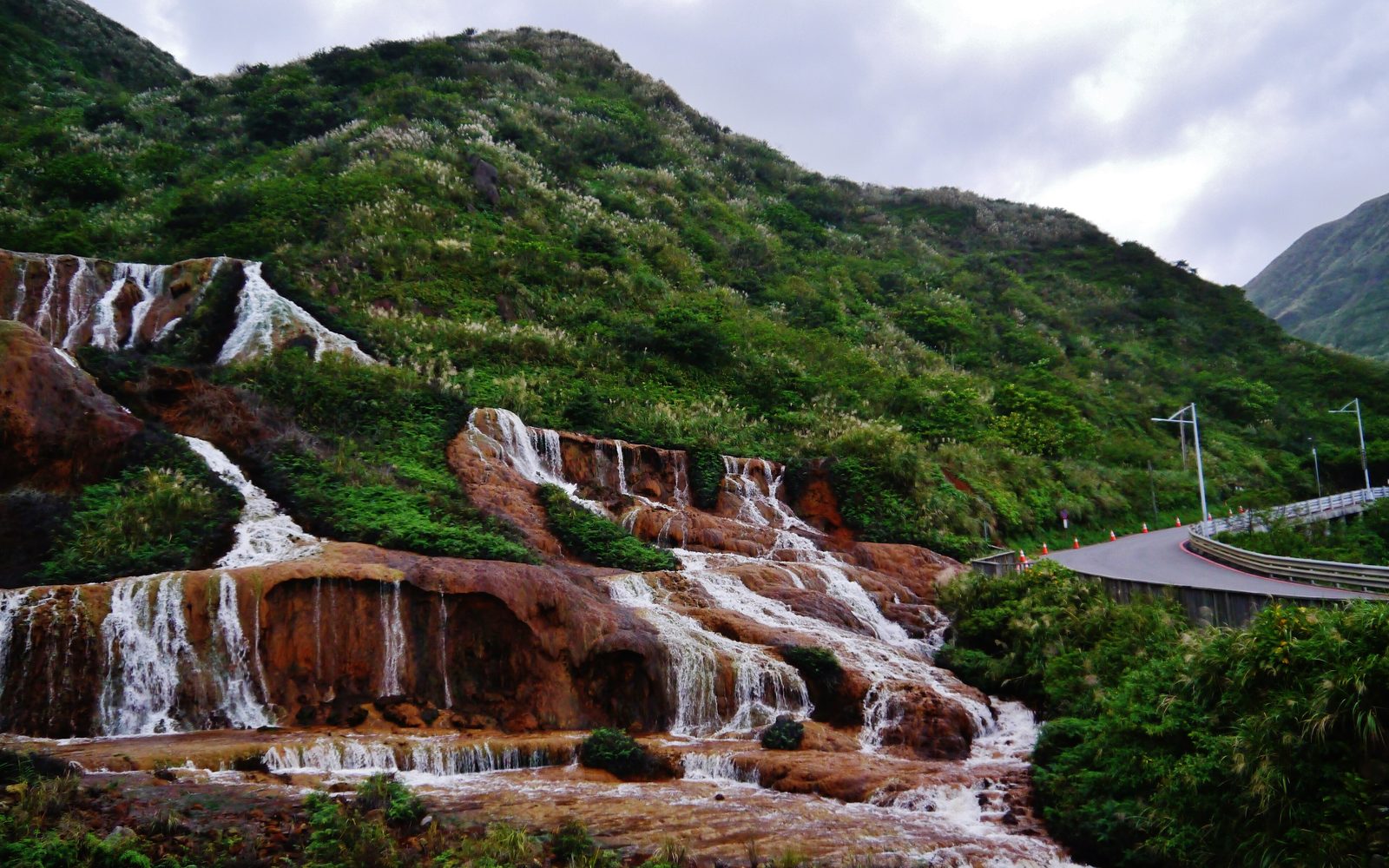
The Golden Waterfall is right beside the road at Shuinandong, where water gushes out of the ground. The water seeps through old mining areas and picks up sulfur, arsenic and copper ores, which turn it into golden, acidic mineral water with an orange tint; from a distance it looks like a wall of golden rock. It never stops flowing, and is at its most impressive after heavy rain. The waterfall can be seen at any hour, every day.
The Remains of the 13 Levels, near Shuinandong and the Yin-Yang Sea, were once the largest ore-dressing and refining plant around Shuinandong, Jinguashi and Jiufen. Built in 1933, they stopped working in 1987, and the best view is from the Shuinandong parking lot or the Changren community. The ruins are lit from 18:00 to 21:00 every night.
The Yin-Yang Sea lies just north of the Shuinandong settlement and is famous for its mix of blue and yellow water. Jinguashi's mountain is rich in pyrite; minerals washed down from it turn the water of the bay yellowish brown, against the blue of the open sea.
A museum FAQ last updated in September 2023 describes a shuttle bus from the Gold Museum to Shuinandong, for the Yin-Yang Sea, the Golden Waterfall and the 13 Levels, leaving every hour on the hour from 10:00 to 18:00 on weekdays and every 30 minutes at weekends and on holidays. The Taiwan Tourist Shuttle 856 (Golden Fulong line) links Jiufen Old Street and Ruifang station; a New Taipei tour page tells visitors to take it from the Golden Waterfall stop to Jiufen Old Street or to Ruifang Train Station.
Teapot Mountain
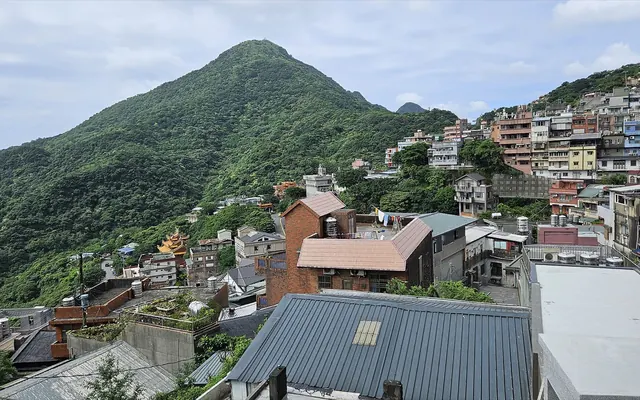
Teapot Mountain, 602 meters high, is the backbone of the Jinguashi area, and its trail is the most popular hike in Jinguashi. It takes about 30 to 50 minutes to reach the top from the Quanji Temple parking lot. Seen from Jinguashi, the rock on the summit looks like a teapot without a handle, hence its nickname, the Earless Teapot. The New Taipei listing calls it a short round-trip trail of about an hour, with views over the Yin-Yang Sea, Keelung Mountain across the water and the whole of Jinguashi.
Facts on this page were checked against official sources on . Hours, fares and trail status change: confirm on the day.