What it is and its story
Mengjia Longshan Temple was built in 1738 (some records give 1740) with funds gathered by settlers from three counties of Quanzhou: Jinjiang, Nan'an, and Hui'an. These settlers brought an image of the deity Guanyin from the Longshan Temple at Anhai in Jinjiang to establish the new site. The temple has stood in Wanhua District through numerous disasters, undergoing rebuilding after an earthquake in 1815, repairs following an 1867 storm, and a major restoration in 1919 after termites damaged its wooden beams.
During World War II, an air raid in 1945 destroyed the main hall entirely. Despite the devastation, the statue of Guanyin survived untouched on its lotus seat. The complex was designated a Class 2 historic site in 1985 and was later upgraded to a national monument in 2018.
What to see inside
The temple houses hundreds of statues representing Buddhist, Taoist, and Confucian deities. Guanyin serves as the main deity in the central hall, while the rear hall accommodates various Taoist and Confucian gods. Visitors can also find a hall dedicated to Guan Yu, also known as Guan Sheng Di Jun, which features its own set of divination lots, as well as a shrine to the matchmaker god Yue Lao, where people ask for a red thread.
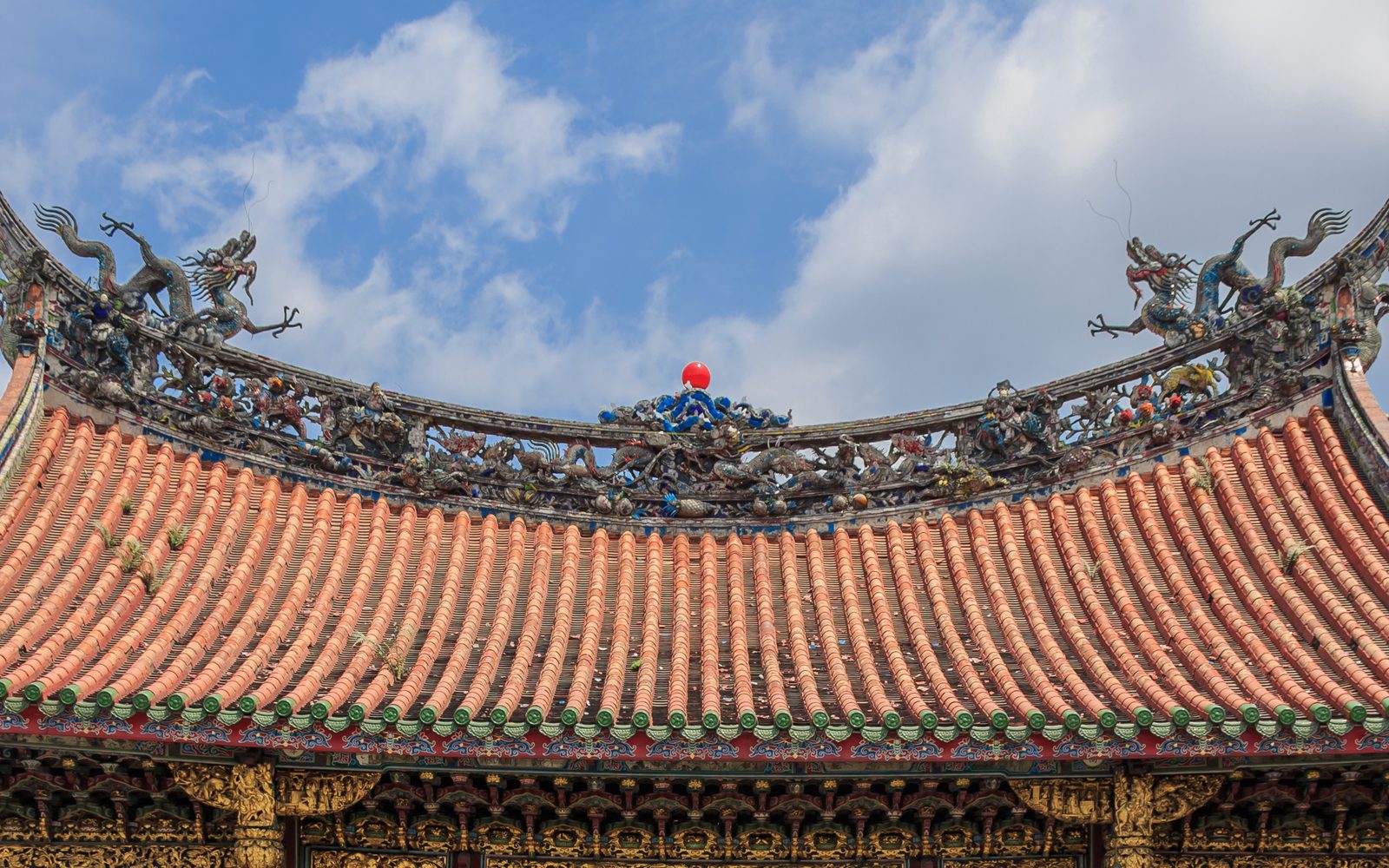
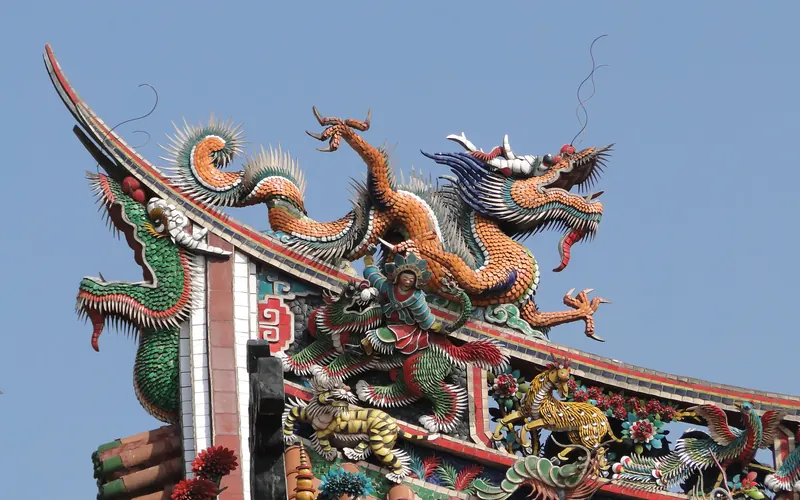
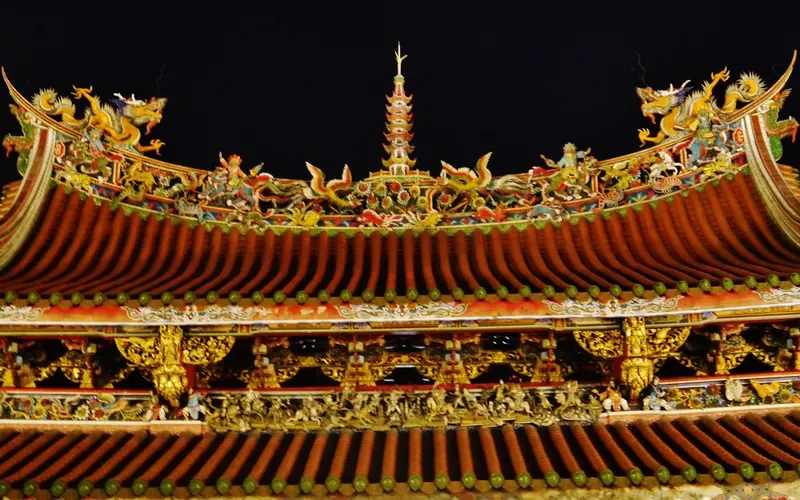
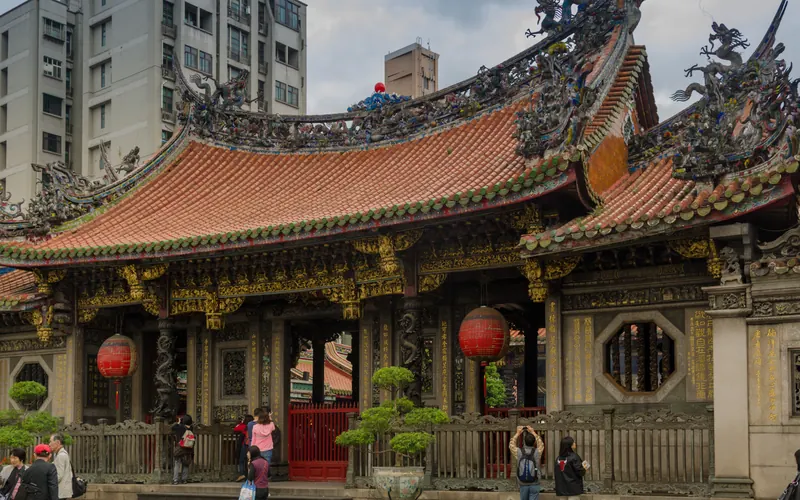
The architecture contains several rare craftsmanship details. In the front hall stands a pair of bronze-cast coiled-dragon pillars, which is the only pair of its kind in Taiwan. Inside the main hall, look up to see a spiral caisson ceiling assembled entirely from interlocking wooden brackets without using a single nail. Along the roof ridges and eaves, decorative figures of dragons, phoenixes, and qilin are crafted from cut-and-paste porcelain, known as jiannian, alongside colorful koji pottery.
How to visit respectfully
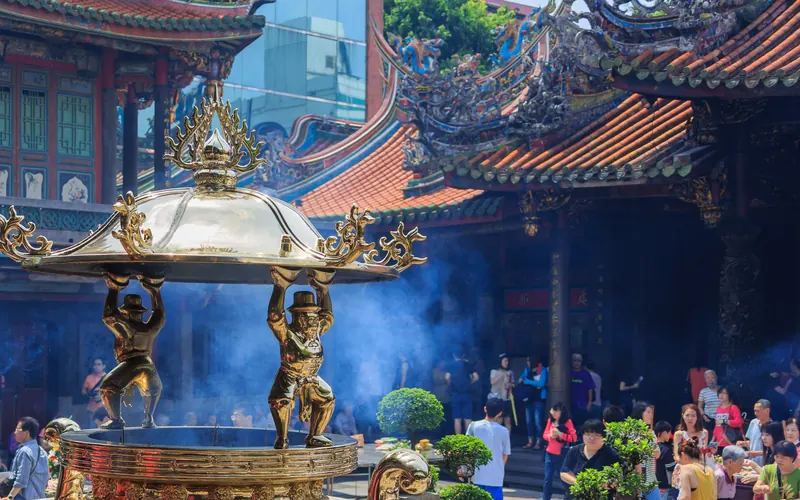
Traditional custom guides the path through the complex. You enter through the Dragon Gate on the right-hand side and exit through the Tiger Gate on the opposite side. When approaching a deity to pray, place your palms together and quietly introduce yourself by stating your name, date of birth, home address, and personal wish.
Visitors seeking guidance may draw a Guanyin oracle lot using wooden divination blocks. You cast the pair of crescent blocks to verify your selection, requiring three consecutive holy throws to confirm the lot number. Temple staff members are available on site between 10:00 and 19:00 to interpret the meaning of the written poems.
Getting there and timing
Mengjia Longshan Temple is located at No. 211, Guangzhou Street in Wanhua District. Reaching the site is straightforward by public transit; take the Bannan Line on the metro system to Longshan Temple station and walk out of Exit 1. The temple gates are roughly a 3-minute walk from the station exit.
The temple gates open every day from 06:00 until 22:00, with the final entry permitted at 21:45. Regular worshippers arrive in large numbers on the 1st and 15th days of each lunar month. The temple's yearly calendar also features special traditional events, including a lantern show during the first lunar month, the Buddha-bathing festival in the fourth lunar month, and Ullambana ceremonies in the seventh lunar month.
Quick answers
What are the opening hours for Longshan Temple?
The temple is open daily from 06:00 to 22:00, with last entry admitted at 21:45.
How do I get to Longshan Temple by metro?
Take the Bannan Line to Longshan Temple station and take Exit 1. The temple is approximately a 3-minute walk away.
Which gate should I enter and exit through?
You should enter through the Dragon Gate on your right and leave through the Tiger Gate.
What times are oracle poem interpreters available?
Staff members interpret the oracle lot poems between 10:00 and 19:00.
Hours, entry and the metro exit were checked on with Taipei Travel - Lungshan Temple, Mengjia Longshan Temple - official site and Taipei Metro - Longshan Temple Station information map BL10-SW(24.01). Hours change for holidays and festivals: confirm on the day.