Taiwan in January 2027: weather, events and where to go
January brings mild, gray days north and sunshine south. Learn about 2027 temperatures, mountain snow rules, and holiday dates before planning your trip.
January is Taiwan's coolest month, mild in the lowlands but gray and damp in the north and dry and sunny in the south. In 2027, the month includes the three-day New Year's Day long weekend from Friday, January 1 to Sunday, January 3, but it does not include Lunar New Year. That break runs for 7 days from February 4 to February 10, 2027, with the first and second days of the lunar year falling on Saturday, February 6 and Sunday, February 7.
January 2027 at a glance
Taiwan's 2027 government calendar provides the three-day New Year's Day break from Friday, January 1 to Sunday, January 3, 2027. Lunar New Year does not fall in January in 2027; the first and second days of the lunar year are Saturday, February 6 and Sunday, February 7, 2027, and the full break runs for 7 days from February 4 to February 10, 2027. If you are comparing months on our best time to visit Taiwan guide, keep in mind that the travel surge around Lunar New Year in Taiwan avoids January entirely in 2027.
The Tourism Administration describes Taiwan's winters from December to February as relatively warm and short, noting that the weather fluctuates in winter and spring. In the lowlands, the lowest temperatures generally stay between 12 and 17 °C.
Temperatures across the island
Central Weather Administration (CWA) station normals for the 1991 to 2020 period show a steady temperature rise from north to south:
- Taipei: mean temperature 16.4 °C, average daily high 19.4 °C, average daily low 14.2 °C
- Taichung: mean temperature 17.0 °C, average daily high 22.3 °C, average daily low 13.4 °C
- Hualien: mean temperature 18.3 °C, average daily high 21.4 °C, average daily low 15.8 °C
- Kaohsiung: mean temperature 19.7 °C, average daily high 24.2 °C, average daily low 16.2 °C
At the Zhuzihu station on Yangmingshan above Taipei, the January mean is 12.0 °C. Among the four lowland stations, Taichung experiences the widest swing between daytime highs and nighttime lows.
Wet north, dry south
The island's winter weather split comes from regional wind patterns. Cold air flows out from a high-pressure system over the Asian continent and turns into a northeast wind near Taiwan, known as the winter northeast monsoon. The CWA explains on its winter climate portal that this winter monsoon is cold and dry, and its rain falls mostly on the north and northeast. The windward northeast receives far more rain than the center and south, where the winter months keep the dry pattern that starts in late autumn.
The 1991 to 2020 CWA normals document this sharp contrast:
- Keelung: 327.8 mm across 19.6 days with rain
- Taipei: 90.5 mm across 13.5 days with rain; 75.9 hours of sunshine
- Hualien: 57.6 mm across 13.4 days with rain
- Taichung: 36.6 mm across 6.6 days with rain; 174.0 hours of sunshine
- Kaohsiung: 19.1 mm across 3.2 days with rain; 177.0 hours of sunshine
Cold surges and what to pack
January is the month in which northern cold air masses affect Taiwan most, and the CWA notes that the East Asian northeast monsoon is strongest in January. Taking Taipei as its example, the CWA says cold surges affect the city on 2.4 days in an average December, close to 6 days in January and about 4 in February.
Over the 1991 to 2020 baseline, Taipei records a low of ten degrees or below on 2.8 days in January, Taichung on 3.4 days and Kaohsiung on 0.4 days. At Zhuzihu on Yangmingshan, lows of 10 °C or below occur on 16.2 days. The CWA issues a yellow low-temperature warning when lowland lows of 10 °C or below are expected, and a red one for 24 hours at 6 °C or below, where lowland means below 200 m.
Pack practical layers, including a warm outer layer and rain gear for northern stops. For a winter trip up to Hehuanshan, Taroko National Park suggests warm clothes, a windbreaker, a raincoat, gloves, a scarf, a woolly hat, sunglasses, a flask, a torch, lip balm and hand warmers.
Snow in the high mountains
According to the Tourism Administration, apart from traces of snow in a few mountain areas in winter, there is no snow in Taiwan. In the high mountains, conditions are properly cold: CWA normals show a January mean of 6.5 °C at Alishan and -0.5 °C at the Yushan weather station.
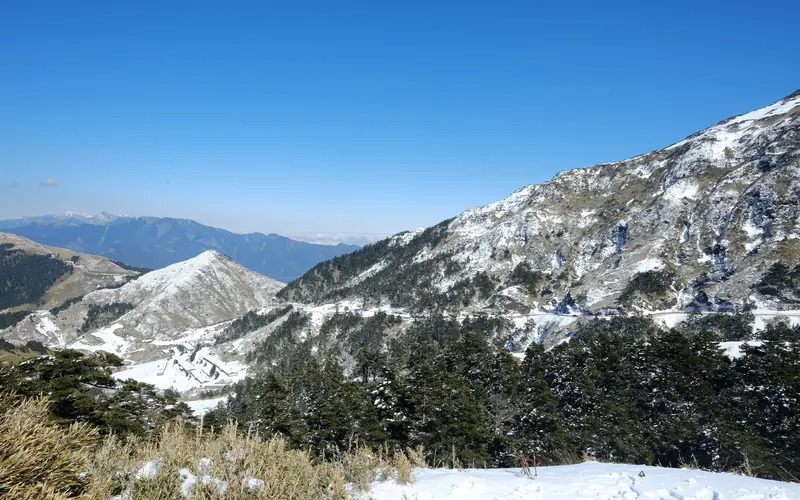
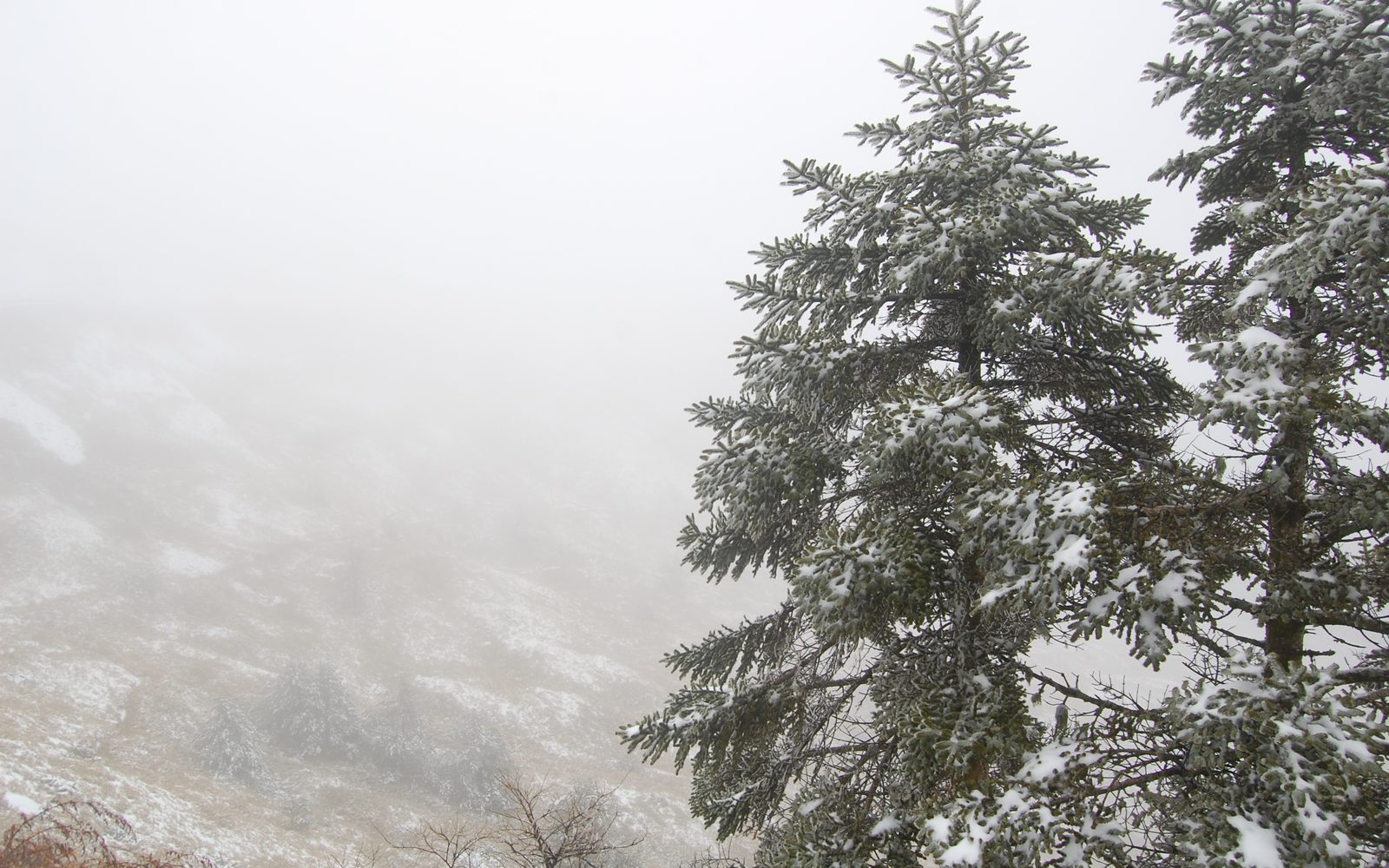
Yushan National Park gives its snow season above 3,500 m as December to April, with not many snowy days, noting that snow depends on how often cold air masses arrive and how strong and moist they are. Hehuanshan is not Taiwan's highest mountain, but it gets snow more often than anywhere else in Taiwan, which with its road access makes it the island's best-known place to see snow. Taroko National Park states that snow falls on Hehuanshan in February and March. At 3,000 m and above, the park records an average temperature of 7.7 °C, often dropping below freezing in January and February. The park warns that the snow season is short and unpredictable, with the timing and amount of snow differing each year, so visitors rushing up on snow reports may find less than hoped and roads jammed with cars.
Driving to Hehuanshan in the snow season
Hualien and Nantou counties join Taroko National Park to publish an annual winter traffic notice. The 2026 notice, published on December 22, 2025, ran from January 1 to March 1, 2026, 60 days, and could start early, end late or be canceled depending on snow. The 2027 notice had not been published when this was checked.
Under the 2026 rules, when snow or ice is on the road, only official vehicles and snowplows may move while the road is cleared. Once plowed, vehicles fitted with snow chains may be let through. Motorcycles of every kind, large buses and trucks over 3.5 tonnes are banned from the controlled stretch. When there is snow or ice, Highway 14A from Dayuling to Cuifeng is closed to vehicles from 6 p.m. to 7 a.m. the next morning. Because proper chains are hard to buy up the mountain, the park advises getting them below (suggesting 4 chains for a car without four-wheel drive and 2 for a four-wheel-drive car) and practicing fitting them first. The park's first rule for winter driving is not to drive mountain roads at night or at dawn, when visibility is poor, ice is common and rescue is slow.
Hot springs on cold days
The Tourism Administration says cold fronts reaching Taiwan are much loved by the island's hot-spring fans. In Taipei's Beitou, the Beitou Hot Spring Museum is fully closed for restoration from November 9, 2026 to October 2027, with reopening expected in late October 2027. The Beitou Park open-air public bath has been closed since January 24, 2025 for rebuilding; the parks office stated works were due to finish by November 30, 2026 and that the opening date would be announced on its website.
Beitou operates three free foot-soaking pools from 08:00 to 18:00, closed on Mondays, and the city notes that its hot spring season begins in October. In Yilan, Jiaoxi hot springs Park is about 500 m north of Jiaoxi railway station, with sodium bicarbonate waters that form one of Taiwan's few flatland hot springs.
What is on in January
Several events and seasonal sights run throughout the month:
- The 2027 New Year's Party takes place at City Hall Square in front of Taipei City Hall from December 31, 2026 into January 1, 2027, paired with the Taipei New Year's Eve fireworks countdown show at Taipei 101.
- The National Palace Museum in Taipei offers free entry to visitors of all nationalities on New Year's Day, January 1, and opens Tuesday to Sunday from 09:00 to 17:00.
- In Kaohsiung's Maolin National Scenic Area, the Butterfly Beauty Festival is listed from October 31, 2026 to March 31, 2027 at Maolin Ecological Park, where thousands of purple butterflies winter in the valley from November to March.
- The Southwest Coast National Scenic Area lists its bird-watching season from October 1, 2026 to March 31, 2027; the coastal Yunjianan area hosts about 70% of the world's rare black-faced spoonbills.
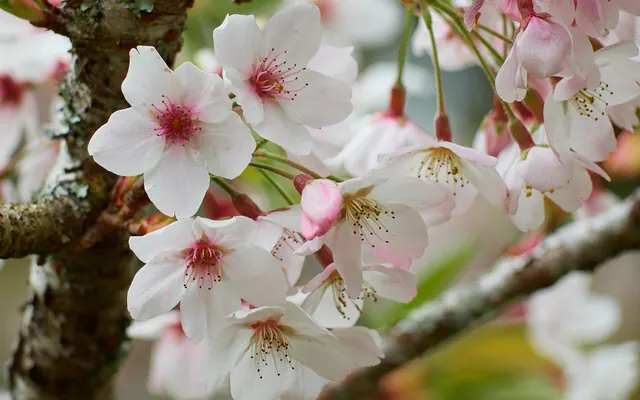
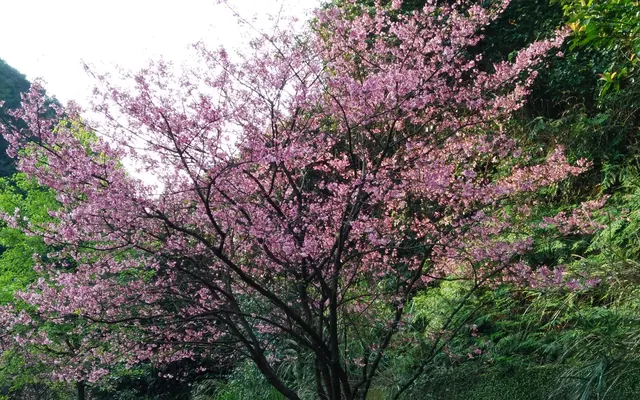
- The Alishan National Scenic Area states that cherry blossom season in the Alishan National Forest Recreation Area, served by the Alishan Forest Railway, lasts from January to March.
Other festivals start later. Yangmingshan's flower festival belongs to February and March; in 2026, it ran from February 5 to March 15, 39 days. Taipei's Lunar New Year shopping market around Dihua Street ran from January 31 to February 15 in 2026, supported by three free shuttle routes and a LINE guide in English, Chinese and Japanese; the dates were released on January 27, 2026. Consult our guide to Taiwan in February for details on later winter events.
Facts on this page were checked against official sources on . Hours, fares and trail status change: confirm on the day.