Taiwan typhoon: what storm season means for your trip
Typhoons in Taiwan bring warnings, typhoon days, and transit changes. Learn how warnings work, when typhoon days happen, and what to check.
Taroko trail reopenings, typhoon warnings, and checked Taiwan updates go straight to Taiwan Explorer on Telegram (@taiwanexplorerclub), at most two posts a day.
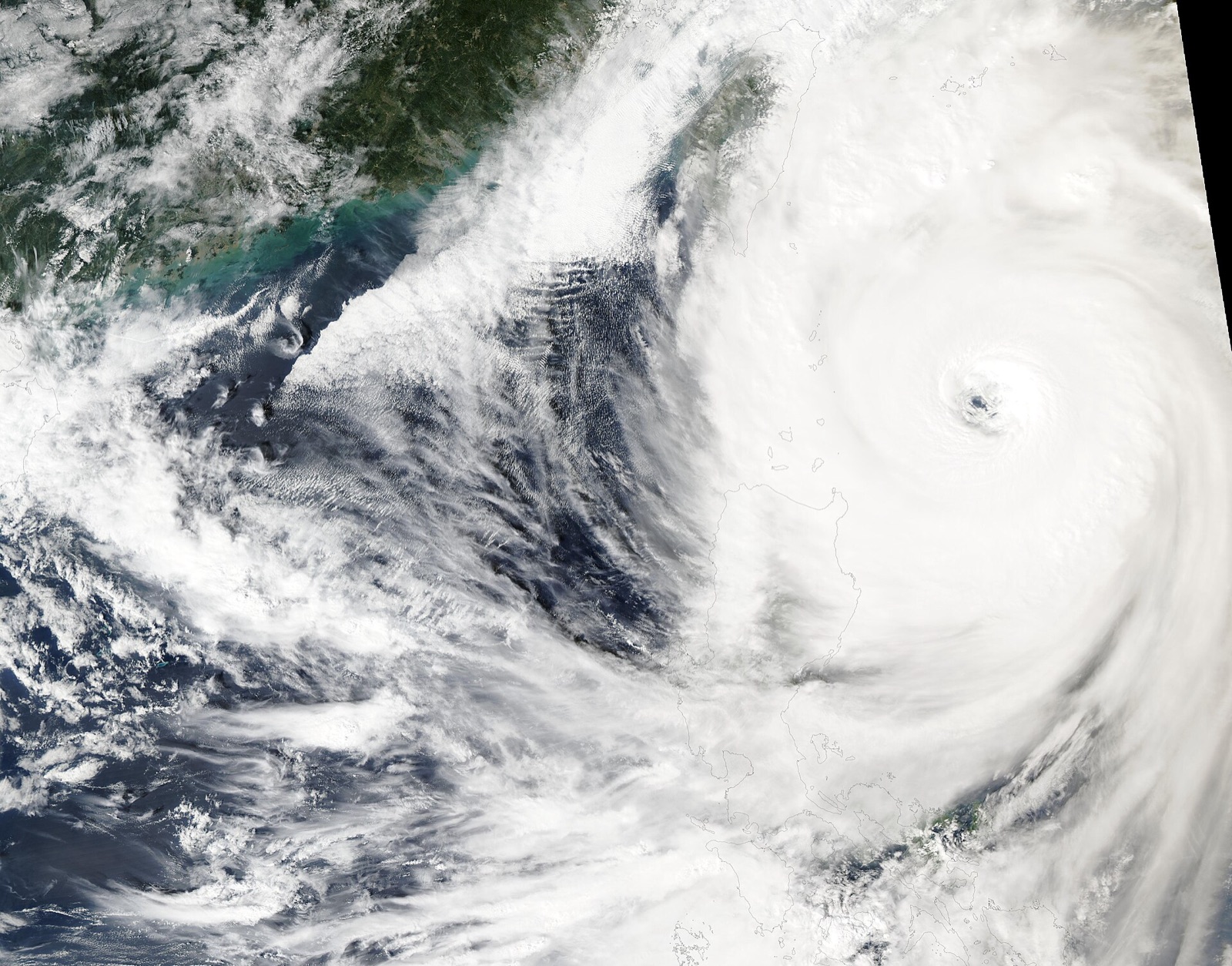
A typhoon can interrupt travel in Taiwan, but a storm usually means keeping plans flexible rather than canceling an entire visit. Averaged over 30 years, about 3 to 4 typhoons hit Taiwan each year, mostly between July and October. Knowing how warnings work and where local authorities announce a typhoon day tells you what to expect when stormy weather approaches.
How often typhoons reach Taiwan
The Central Weather Administration (中央氣象署) says that averaged over 30 years about 3 to 4 typhoons a year hit Taiwan, with an exact average of 3.2 typhoons a year. According to the Central Weather Administration climate encyclopedia, on average about 25.4 typhoons form each year in the north-western Pacific (1991 to 2020), so those that hit Taiwan are only about 12.6 percent of the total.
Most typhoons form between July and October, which together make up about 70 percent of the year's total. The number hitting Taiwan varies by year: in 1998, 17 typhoons formed and 5 affected Taiwan, but in 2022, 25 formed and only 1 affected Taiwan. You can review broader seasonal weather patterns in our guide to the best time to visit Taiwan.
The plum-rain season in May and June
The Central Weather Administration defines May and June as Taiwan's plum-rain (meiyu) season. According to the Central Weather Administration digital science site, plum rain provides about 30 percent of Taiwan's yearly rainfall, second only to typhoons. On average four to five plum-rain fronts affect Taiwan each season.
Sea warning and land warning
A sea typhoon warning (海上颱風警報) is issued 24 hours before the typhoon's gale-force (level 7) winds may reach waters within 100 km of the main island, Penghu, Kinmen or Matsu. A land typhoon warning (陸上颱風警報) is issued 18 hours before the level 7 wind area may reach land.
After a sea warning is issued, a new one follows every 3 hours, with extra ones when needed. If a typhoon forms close to Taiwan, or its wind area, speed or direction changes sharply, the agency may issue the sea or land warning at once, even together, without waiting for the usual lead time. You can monitor conditions on our live weather page or check the Central Weather Administration typhoon warning page, which shows the sea warning, the land warning, and the warnings and special bulletins for each county.
Typhoon days
A typhoon day (颱風假), stopping work and school, is decided by the mayor of a special municipality or the magistrate or mayor of a county or city for their own area, and then reported to the national personnel office. The wind test in the rule is that, in an area the typhoon's storm radius may cross within the next 4 hours, the average wind could reach level 7 or gusts could reach level 10.
Local announcements follow set times:
- For a full day or a morning off, the announcement is due between 7 pm and 10 pm the evening before.
- For an afternoon or evening off, the announcement is due before half past ten in the morning of the same day.
- If wind and rain strengthen after midnight, the authority is to announce a day off before half past four in the morning.
The rule covers government agencies and public and private schools. Staff on shifts, in rescue work or in special duties may be told to carry on working, and private firms may carry on. The Directorate-General of Personnel Administration (人事行政總處) runs a page for checking which areas have stopped work and classes because of a natural disaster.
Trains and trips when a typhoon comes
For overall transport details, see our guide to getting around Taiwan. Before Typhoon Champi in October 2026, the high-speed rail company opened a typhoon response center that watches the storm around the clock and announced normal service on the next day, with a promise to announce any change as early as possible. The high-speed rail company warns that if wind or rain on a section passes its limits, trains slow down, and it asks passengers to leave extra time for connections. For tickets bought from the day a sea warning is issued to the day it is lifted, you can refund an unused ticket at any high-speed rail station within one year of the travel date without a fee when the train is canceled or changed; delays caused by speed limits do not qualify for a delay refund.
The Taiwan Railway's rule on typhoon refunds (for group tickets) applies to the period of the sea typhoon warning, including the default period and the actual period. Under that rule a typhoon refund can be asked for from 1 day before the first day of the sea warning to 1 year after the travel date. Flights and ferries can be canceled in severe storms, so check with the carrier.
A real example from October 2026
On October 22, 2026, the Pingtung County government closed four tidepool sites on Xiaoliuqiu because of Typhoon Champi. On that same evening, the high-speed rail company ran 5 extra southbound trains with free seating because many people were heading home early before the holiday. On October 24, 2026, the county said the sites would reopen on Sunday October 25, and asked visitors to go only when the sea is suitable.
After Typhoon Champi, the national park reopened all permit-only routes in its Ecological Protection Area from 00:00 on October 27, 2026. Two routes were still pending that day: Mt. Pingfeng reopens on December 1, 2026, and Mt. Qingshui and the Zhuilu Old Road are to be announced later. You can see how mountain closures affect visitor routes in our guide to Taroko Gorge.
What to do on the day
Check the Central Weather Administration page, which shows typhoon track forecasts and quantitative rainfall forecasts; the agency notes that the rainfall product is most accurate for large amounts of rain from typhoons and plum rain. Check the national personnel office page to see whether your area has stopped work and classes, check our live road cameras before heading onto the highways, and check train operator announcements. The national park tells hikers to check the Highway Bureau's real-time road service or the Happy Highway app for repair progress and road control after a typhoon. When reading updates, note that the weather agency sorts typhoons by maximum wind near the center into mild, moderate and strong; a strong typhoon has winds of 51.0 meters per second or more.
Facts on this page were checked against official sources on . Hours, fares and trail status change: confirm on the day.