Kinmen 金門: flights, Minnan villages, kaoliang and Lieyu
How to visit Kinmen: domestic flights, bus and bicycle travel, historic Minnan villages, kaoliang cellar tours, and crossing the Kinmen Bridge to Lieyu.
From Taiwan's main island, Kinmen (金門) is reached by air only, with short domestic flights from Taipei, Taichung, Chiayi, Tainan, and Kaohsiung. The islands feature old southern Fujian villages, coastal scenery, local sorghum liquor, and cycling routes. Kinmen County includes two populated islands worth visiting: the main island and Little Kinmen, also known as Lieyu (烈嶼).
Flying to Kinmen
UNI Air and Mandarin Airlines fly to Kinmen's Shangyi Airport from five cities. According to Kinmen Travel, flight time is about 55 minutes from Taipei or Kaohsiung and about 50 minutes from Taichung, Chiayi, or Tainan. For transport to domestic terminals on the main island, see getting around Taiwan.
Kinmen Airport's November timetable lists daily flights from Taipei from 06:40 to 18:20 on Mandarin Airlines and UNI Air. The 07:00 jet lands at 08:05, while the 06:40 turboprop lands at 08:00. From Taichung, daily flights run on both airlines from 07:00 to 17:25. Kaohsiung has daily departures from 07:00 to 17:40. Tainan has three daily UNI Air flights, at 09:40, 13:00, and 16:00, each taking 50 minutes. Chiayi has one daily UNI Air flight, leaving at 12:45 and landing at 13:40.
You need to have finished check-in half an hour before departure. All airlines require ID, such as a passport, before boarding. Over national holidays such as Lunar New Year, Tomb Sweeping Day, the Dragon Boat Festival, and the Moon Festival you must book ahead. Holiday tickets go on sale online about two months in advance, while on most ordinary weekdays seats remain available. The airport sits near the middle of the island, a 25-minute bus ride from Jincheng (金城), the main town, and 10 minutes from Shanwai (山外).
Fog, typhoons and the best season
March to May is fog season, when thick fog often disrupts flights; spring is also the most humid time of year. From the end of March to mid-May, fog can cancel flights for a day or two, so the county advises a flexible plan with a spare day at each end of the trip. Kinmen Airport's website shows the day's departures, arrivals, and delays. If fog or a typhoon cancels your flight, you receive a full refund, but you must buy a new ticket. Passengers from canceled flights receive no priority and may be placed on a waiting list. Similar spring weather patterns affect flights across other islands, such as Matsu.
Typhoons rarely hit Kinmen directly, but a storm over Taiwan's main island cancels flights to and from Kinmen. The typhoon season falls mainly from July to September, as described in our guide to typhoon season in Taiwan.
The county calls autumn, from mid-October to the first half of December, the best time to visit, with daytime highs of 18 to 25°C and nights around 12°C. Summer runs from June to mid-October, averaging 29 to 33°C (85 to 92°F) with high humidity, strong sun, and sea breezes. From mid-December to February, night temperatures can drop to 3°C with daytime highs around 12°C; the northeast monsoon makes winter cold, dry, and windy. Spring brings rapeseed flowers along with fog, and late April into May usually brings a plum-rain spell of showers.
Getting around by bus, shuttle and bicycle
The county's guide gives the public bus fare as NT$12 a ride, paid as you board (drivers have no change), plus another NT$12 if you ride past about half the route. In addition to cash, you can pay with an EasyCard or iPASS, tapping on when boarding and again when getting off. Bus routes run about every half hour between 06:00 and 20:30, some finish in late afternoon, and no buses run after about 21:00. The three main bus stations are Jincheng, Shanwai, and Shamei. Taxis wait at the airport, where the fare to Jincheng is about NT$250 in the county guide.
The Taiwan Tourist Shuttle runs 7 routes in Kinmen from Jincheng and Shanwai bus stations. Shuttle passes cost NT$250 for half a day, NT$400 for one day, or NT$700 for two days, covering unlimited rides on shuttle routes and Kinmen regular buses during validity. Passes are sold online, at 7-Eleven and FamilyMart kiosks, at Jincheng and Shanwai stations, on the bus, and at the airport. Each route lasts half a day with an onboard Mandarin-speaking guide:
- Route A: Departs Jincheng bus station daily at 08:30 for Shuitou (水頭) village and Wentai Pagoda.
- Route C: A hop-on, hop-off bus from Shanwai with guides at stops, running Tuesday to Sunday to Shanhou folk village and Shamei old street.
- Route D: Departs Shanwai bus station at 13:30 for Banyan Park, Qionglin (瓊林) village, and Tai Lake.
- Route E: A tour of the island's stone wind lion gods; the morning run visits 34 figures and the afternoon run visits 29, with no two alike.
Two bike shops in Jincheng rent bicycles by the hour or day. The county calls Kinmen a great cycling destination with little traffic on smaller roads. Because winter winds are strong and cold, bring a windbreaker if cycling then.
The old Minnan villages
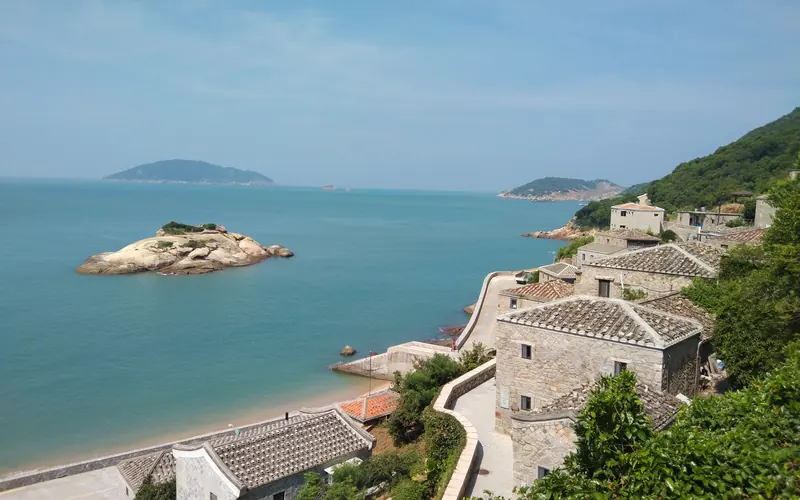
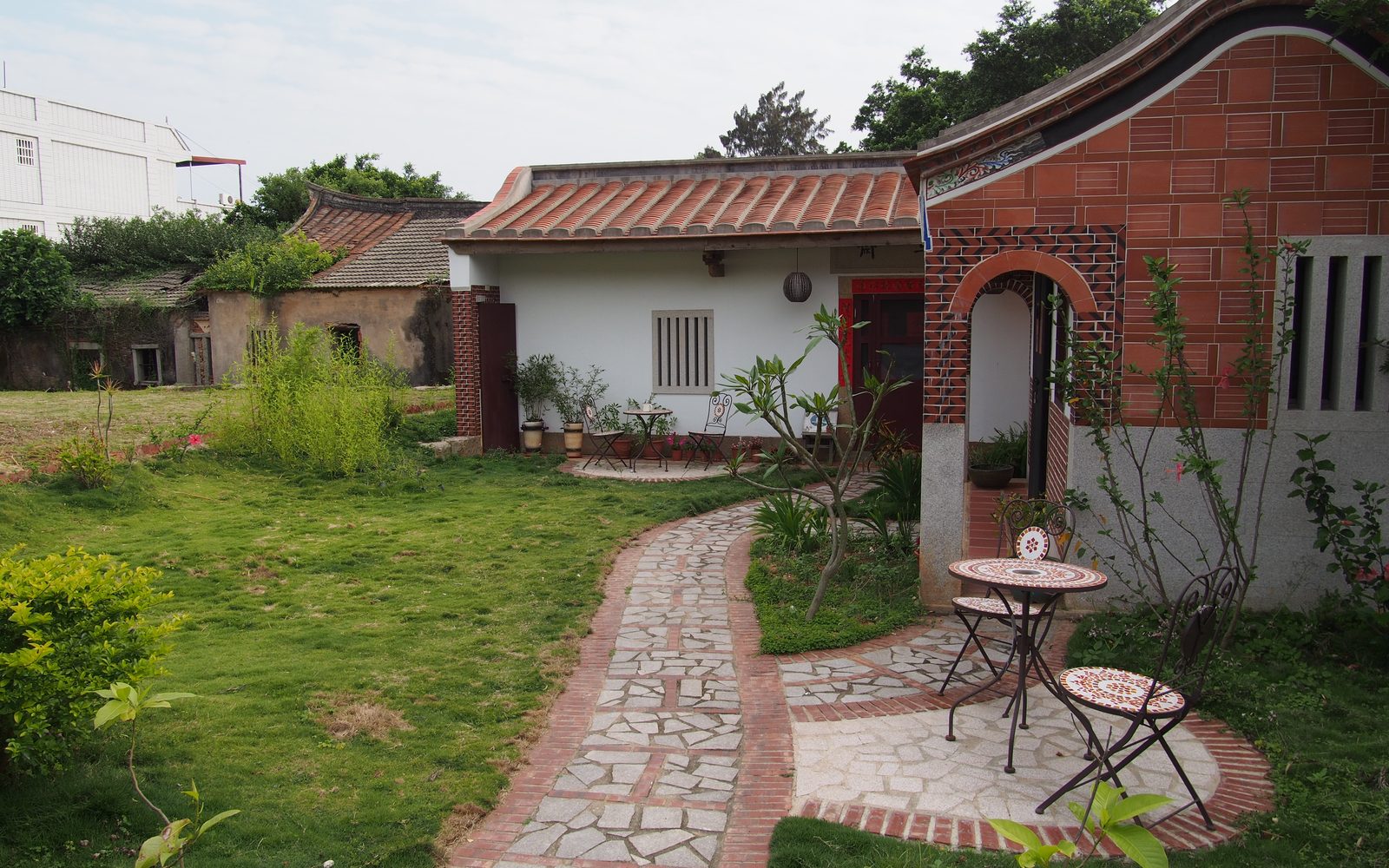
Seven settlements are designated Kinmen National Park villages for their dense traditional architecture: Shuitou, Zhushan (珠山), Oucuo (歐厝), Beishan (北山), Nanshan, Qionglin, and Shanhou (山后). Many retain layouts shaped by feng shui. The National Park Service notes that Kinmen has the highest concentration of traditional southern Fujian (Minnan) buildings in Taiwan. While early settlements formed about 700 years ago, most surviving buildings date from the Ming and Qing dynasties. Most belong to a single family name, sit close to water, and were built to block cold winds.
Shuitou is a historic village near the harbor where overseas merchants in the Qing dynasty funded schools, temples, and Western-style residences. The National Park Service regards Shuitou's Western-style houses as the most representative in Kinmen, reflecting an architectural boom that peaked between 1920 and 1930. Deyue Tower, standing 11.26 meters tall, was once Kinmen's tallest landmark. Shuitou also holds a museum in its former elementary school and the Overseas Chinese Culture Exhibition Hall.
Zhushan, in southwest Kinmen, is a single-surname village of the Xue family clustered around a large central pond said to gather incoming fortune; its old houses have been restored. The county's 13.1 km Jincheng cycling route connects Shuitou, Zhushan, and Oucuo. Oucuo beach is among the island's popular beaches, alongside Houhu and Chenggong.
Qionglin is Kinmen's largest natural village, primarily of the Cai family, featuring ancestral halls and corner wind lion gods. A free guided walk through Qionglin runs for about 2 hours every Saturday and Sunday from 16:00 to 18:00 (sign up on site from 15:30), and runs daily from July 1 to August 31.
Shanhou Folk Culture Village in Jinsha is a planned group of eighteen traditional Fujian-style houses finished in 1900 after 20 years of work; it now houses museums and a wind lion god mailbox with a special postmark. Beside Beishan and Nanshan, the Shuangli Wetlands Nature Center explains local ecosystems.
Jincheng old town
Jincheng, the island's most populous township, was known historically as Houpu. A free guided walk through its historic core departs every evening at 19:30 from the Qing-era Zongbingshu, ending at Mofan Street. Sign-up is on the spot at 19:30. Mofan Street is the town's prettiest shopping street, with an architectural style recalling Japan's Taisho era.
Low tide, the sea of stars and birds
Jiangong Islet (建功嶼) is a 500-square-meter islet off Nanmen village in Jincheng, accessible only at low tide via a stone-slab path flanked by tall oyster-farmer sculptures. Kinmen Travel issues tide charts for the route; on November 16, 2026, for example, low tide was 09:55, keeping the path dry from 09:25 to 10:25.
The "sea of stars," a blue glow produced by marine dinoflagellates, appears most frequently in April, May, and June on moonless nights near high tide with southerly winds. Sightings never follow a fixed schedule; arrive one to two hours before high tide. The county lists Guan'ao embankment, Ci Lake, Chenggong beach, Nanshihu park, Houhu seashore park, and Oucuo beach as likely spots. Do not enter the water, as Kinmen is subject to dangerous riptides.
For birdwatching, blue-tailed bee-eaters nest on the island from April to August, while large flocks of cormorants fly overhead in late afternoon to winter roosts.
Lieyu (Little Kinmen) over the bridge
The Kinmen Bridge (金門大橋) links the main island directly to Lieyu. The Taiwan Tourist Shuttle crosses it via Route G from Jincheng station with an onboard guide on Saturdays and Sundays, accepting the regular NT$250, NT$400, and NT$700 passes.
An 18.5 km cycling loop rings Lieyu, largely sheltered beneath tree canopies. At Maogongshi near Putou village, red granite gneiss rocks line the coast. Lingshui Lake provides birdwatching year-round, especially in winter and spring. In autumn, the Little Kinmen Taro Festival features field harvesting and taro specialties; taro shaved ice with sweet syrup is popular in summer.
Kaoliang, knives and what to eat
Kaoliang, a strong spirit distilled from sorghum, is Kinmen's best-known specialty. Sorghum fields turn golden across the island in autumn. The 16.8 km Jinsha cycling route passes lakes, traditional villages, wind lion gods, and late-autumn grain fields.
The Jingwu Winery Cellar at 200 Jingwu Road in Jinhu stores liquor in a granite tunnel at naturally constant temperature and humidity. Opened to visitors in late 2022, its five-station tour offers tastings of raw liquor, aged kaoliang, and kaoliang cocktails. It opens from 09:00 to 17:00, closing on Tuesdays and Wednesdays.
The county's souvenir categories are gong candy (a peanut brittle), kaoliang, steel knives, beef jerky, and thin noodles. The 金合利 knife factory on Boyu Road in Jinning offers a history gallery, showroom, and demonstrations (open 09:00 to 18:00). Kinmen breakfasts center on Cantonese-style congee with pork, fish balls, and liver, served with crisp-and-soft youtiao. Small, sweet rock oysters are fried or served over noodles; the annual Rock Oyster and Wheat Culture Festival runs for one weekend in April with free farm tours.
Visitor centers
Travel service centers operate at the airport, port passenger terminal, Zhongshan Forest Visitor Center, Rushan Visitor Center, Shuangli Wetlands Nature Center, Shanwai bus station, and Juguang Tower. Staffed desks provide paper maps and offer basic English assistance.
Facts on this page were checked against official sources on . Hours, fares and trail status change: confirm on the day.